Several months ago, I made the case there is too much Chasselas in Switzerland. My well-meaning rant was in response to a call from farmers for more government support for those with excess wine to sell—mostly, over-cropped Chasselas. Although I stand by my original thesis—that no one should subsidize inferior wine—I do want to make one thing perfectly clear: Despite some occasional excesses, Chasselas deserves its place among the great varieties of Switzerland. Serious Chasselas is simple, but it isn’t easy. It requires a great vineyard, exacting viticulture, and a talented winemaker with enough confidence to let the grape speak for itself.
On the back end, it takes a truly patient taster to fully understand the variety—one with an appreciation for subtlety and white space in wine. No less an authority than Jancis Robinson speaks to a change of heart in her own relationship with Chasselas.
Welcome to the club, JR.
As I said, great Chasselas is simple, but it has a lot to say. When well made and from a great site, it oozes with what wine geeks call minerality. Its neutral demeanor perfectly reflects the national ethos. It’s a wine that quietly spreads across the palate in ripples, never in waves, and it quenches thirst like no other.
A credo for all Swiss winemakers should read: “When you damage the reputation of Chasselas, you damage the reputation of Swiss wine.” This has never been more true than now, as Swiss wine is emerging from the last throes of protectionism and into the competitive maelstrom of international markets.
International Grape of Mystery
There are 38,000 hectares of Chasselas worldwide, but there are only a few places where it’s taken seriously as a wine grape. The best examples come from Switzerland, France, and Germany, even though Eastern Europe dwarfs Western Europe in sheer number of vines.
Thanks to researchers and myth-busters José Vouillamoz and Claire Arnold, we can finally dispense with the numerous legends surrounding its place of origin—Chasselas does not come from the Caucasus, the Middle East, southwest France, or from anywhere else outside the Lemanic Arc. Their research shows it probably emanates from the Swiss canton of Vaud, where the greatest intra-varietal diversity is found. The sheer number of mutations, clones, and biotypes found there—coupled with historical data and genetic analysis—is dispositive evidence that Chasselas originated along the shores of Lake Geneva centuries ago.
Chasselas was first referenced in the mid-16th century writings of German botanist Hieronymus Bock as Lautterdrauben or Edeldrauben, and as Fendans or Lausannois in History Plantarum Universalis, an early-17th century work by another German botanist, Johannes Bauhin.
The actual name Chasselas was introduced in 1654 by Nicolas de Bonnefons in his gardening tome, Les Délices de la Campagne. The name is likely derived from the French village of Chasselas, near Mâcon, where the grape transited from its Swiss home in the 16th or 17th centuries.
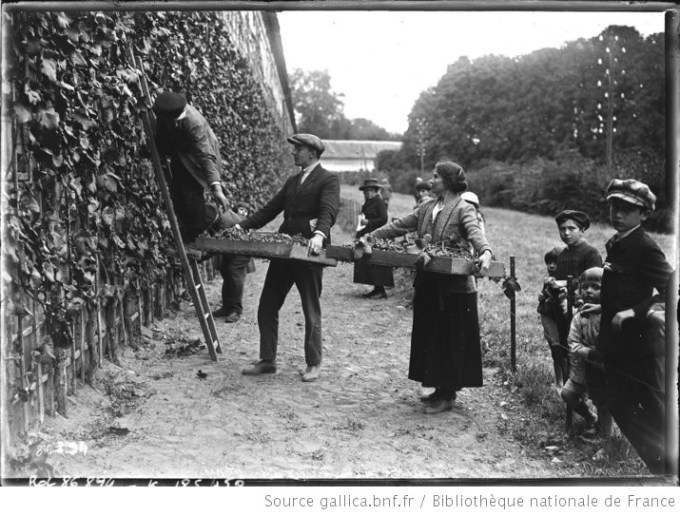
From Chasselas (the village) the grape spread to the commune of Moissac in the administrative region of Occitania, where it currently thrives as Chasselas de Moissac, a popular table grape. Incidentally, Chasselas from Moissac was the first fruit in France to be awarded an AOC (now AOP) in 1971. From there it spread further afield, including to the famous Treille du Roi de Fontainebleau in the 16th or 17th centuries, where it is known as Chasselas Doré de Fontainebleau or Chasselas Thomery.
Ironically, the name Chasselas was not commonly used in Switzerland until the late 19th century. Until then, Swiss botanists knew the grape and its variants by different names such as Bois Rouge, Blanchette, Rose Royal, and Cioutat (Pierre-François Reymondin, 1798); Fendant Roux, Fendant Vert, Bois Rouge, Blanchette, Giclet, Rose Royal, Violet, and Muscaté (R. Blanchet, 1852); and Blanchette, Giclet, Rose Royal, and Violet (Burnat and Anken, 1911).
Meanwhile, in Geneva, Swiss botanist Agustin Pyrame de Candolle (1820), head of the canton’s prestigious botanical garden, accumulated a rare cache of more than 40 variants. This important early collection, now lost, was sourced from vines located in France, and the Swiss cantons of Geneva, Vaud, Neuchâtel, and Zürich. Among them were many iterations of the name Fendant, the most commonly used name in Switzerland before Chasselas.
Because of its extensive intra-varietal diversity, many synonyms, and broad geographic spread, Chasselas must have been confusing to early botanists. Today, the Vitis International Variety Catalogue (VIVC) lists 326 prime names and synonyms for Chasselas. There are likely many more. All of this early history, along with the fact that Chasselas is an orphan grape, leads researchers to believe that the variety is much older than science can currently prove.
The Stopgap Years
In 1923, after the crushing phylloxera crisis, the federal government, in conjunction with canton Vaud, established a Chasselas conservatory at the Station d’Essai de Lausanne (now Agroscope Pully) with the mandate of identifying and commercializing the most productive, virus-free clones. Both the government and the wine industry agreed that the health and productivity of the vineyards was of fundamental importance after the dark years of disease and disastrous harvests.
After more than a decade of observation, the biotype Fendant Roux emerged as the best commercial prospect for Swiss vineyards. It proved to be highly productive, relatively easy to grow, and possessed many desirable organoleptic characteristics.
By 1950, it came to dominate the vineyard landscape from Geneva to Valais, to the near exclusion of everything else.
While Fendant Roux met the early goals of productivity and consistency, issues of quality and sustainability surfaced years later. The liberalization of the Swiss wine market in the early 1990s ended trade barriers for imported wine, which hastened a badly organized shift from quantity to quality. Despite this new imperative, leaders were slow to recognize the damage done by the lack of genetic diversity, particularly the adaptability of a single clone in a changing environment.
French-style AOCs were enacted in each canton, but unlike the French model, there was no overarching regulatory body like the INAO. In true Swiss fashion, each canton established its own regulations, which were predictably random, often confusing, and sometimes contradictory.
In Vaud this meant, among other things, a continuation of the practice of promoting village over variety, as is done in Burgundy. Thus, names like Féchy, Mont-sur-Rolle, Yvorne, St-Saphorin, and others, have become place-holder names for Chasselas. Vaud is alone in this practice, but in response to dwindling consumer engagement, cantonal authorities are now sounding the alarm. Old regulations will be scrutinized with an eye towards reengaging the consumer. Introducing the name Chasselas to the label might be a good place to start.
Meanwhile, in Valais, the name Fendant is front and center on all bottles of Chasselas as a legally protected synonym. Since the synonym Gutedel is used in the German-speaking cantons, the name Chasselas is only found on labels from Geneva, Neuchâtel, and Lac de Bienne in canton Bern. This means more than 90% of Switzerland’s Chasselas does not even include the name on the label. This is a marketing handicap, both at home and in international markets, that needs to be fixed.
The Pully Legacy
Fortunately, the scientists at Pully continue their hard work. Even though their role has changed from preservationists to nurserymen, the goal continues to be the diversification of Vaud’s vineyards. In addition to the original collection of several dozen variants, 226 additional accessions were gathered from pre-clonal era vineyards in Geneva, Vaud, and Valais (2011-2013) and 84 more from the French collection at INRAE (2017). Today, Pully numbers 381 accessions, the largest Chasselas conservatory in the world.
Their research involves not just breeding and virus eradication, but the management of other diseases, including, millerandage, powdery mildew, phomopsis, and eutypa dieback (the last two were incorrectly lumped together and presented as dead-arm disease).
Another legacy of the Pully conservatory is the amount of data accumulated from 100 consecutive years of observation. Whether from cool years, hot years, dry years, wet years, productive years, or meager years, Chasselas in all its forms has been well studied there. This pool of data will be extremely important in meeting the challenges of climate change, dwindling environmental resources, and evolving tastes.
Chasselas: The Modern Era
Whether you call it Chasselas, Fendant, Gutedel, or, perhaps by the name of a specific biotype, contemporary Chasselas is about to change.
Essential to this change are two site-specific conservatories formed from the Pully collection: the Conservatoires Mondial de Chasselas at Rivaz (Lavaux, 2008) and Mont-sur-Rolle (La Côte, 2017). Each is led by an iconic Swiss winemaking talent: Louis-Philippe Bovard at Rivaz, and Raymond and Laura Paccot at Mont-sur-Rolle. Together they are the practical stewards for the commercialization of Pully’s breeding research.
Each site hosts the same 17 variants chosen from the Pully collection. Each is focused on the biotypes and clones which may be best adapted to the given sites. While the issue of productivity is still relevant, the emphasis is now on organoleptics, genetic diversity, sustainability, and adaptability to climate change. Micro-ferments of each of the clones are undertaken annually at each site.
The 17 variants under close study are listed in the table below.
| 17 Conservatory Clones (Rivaz & Mont-sur-Rolle) | Yield | Berry Weight | Sugar | Total Acid | Tartaric | Malic | pH | YAN |
| Apyrène | ↓↓ | ↓↓ | ↔+ | ↔− | ↑ | ↓ | ≈ | ↔− |
| Blanchette | ↑↑ | ↔+ | ≈ | ↔− | ↔− | ↓ | ↔− | ↓ |
| Bois Rouge | ↑↑ | ↔+ | ↔− | ↓ | ↔− | ↓ | ≈ | ↑ |
| Cioutat | ↓ | ↓↓ | ≈ | ↑ | ↑ | ↓ | ↔− | ↓↓ |
| Coulard | ↑↑ | ↔+ | ↔+ | ↑ | ↑ | ↔+ | ↔− | ↔− |
| Fendant Roux | ↑↑ | ↔+ | ↔− | ↔+ | ↔− | ↑ | ≈ | ≈ |
| Fendant Vert | ↔+ | ≈ | ≈ | ≈ | ↔+ | ↓ | ↔− | ↑ |
| Giclet | ↑ | ↓ | ↑ | ↑ | ↑ | ↔− | ↔− | ↓ |
| Grains Pâles | ↑↑ | ↑ | ≈ | ↔+ | ≈ | ↑ | ≈ | ↑ |
| Jaune Cire | ↓ | ↔− | ≈ | ↓ | ↔− | ↔− | ↔+ | ↑ |
| Muscaté | ↓↓ | ↔− | ↔+ | ↓ | ↔− | ↔− | ↔+ | ↓ |
| Plant Droit | ↑↑ | ≈ | ↔+ | ↑ | ↑ | ≈ | ↔− | ↓ |
| Rose Royal | ↓ | ↔+ | ↓ | ↓ | ↓ | ↔− | ↔+ | ↔− |
| Rouge | ↔− | ↔+ | ↓ | ≈ | ↔− | ↑ | ≈ | ↔+ |
| Tetraploïde | ↓↓ | ↑↑ | ≈ | ↔+ | ≈ | ↑ | ≈ | ↑ |
| Tokay Angevin | ↑↑ | ↔+ | ↔− | ↑ | ↔+ | ↑↑ | ≈ | ↑ |
| Violet | ↓↓ | ↓ | ↔+ | ↓ | ↓ | ↓ | ↔+ | ≈ |
Tasting the Work
To date, Pully has developed 10 certified clones from the 17 variants: RAC 4-8 and RAC 72-76. RAC 4, 5, 7, and 72 are clones of the biotype Fendant Roux. A biotype—Fendant Roux in this case—carries the same genetic information as the Chasselas variety, but may express one or more genes differently, usually as an adaptation to unique local conditions. To complicate matters, individual vines of the biotype Fendant Roux may also express themselves differently. Clones will be made from those which express the desired characteristics. These clones are then propagated and made available to individual growers.
Thus, there are four clones of Fendant Roux, three of Giclet, two of Bois Rouge, and one of Rose Royal. Many others exist, but they are not certified for commercial use.
One last thing about the biotypes Fendant and Giclet:
Fendant is not just a legally protected synonym in Valais, the word tells us something about its morphology. Fendant is derived from the French verb fendre, to split, which is what happens when you squeeze a berry between thumb and forefinger—the juice dribbles from the split.
Giclet, on the other hand, is derived from the French verb gicler, which means to squirt. When squeezed, as above, it squirts much like sausage on a grill when the skin is pierced. A survey of Swiss vineyards conducted between 2011-2013 showed that Giclet clones were much more prevalent than first thought. Look for more Giclet types in well diversified Chasselas vineyards of the future.


2020 was the first year for micro-fermentations at the Mont-sur-Rolle conservatory, courtesy of the Paccot family of Domaine La Colombe. The family made available a parcel in one of their best climats, Petit Clos, in order to launch the project. It is, indeed, one of the best sites in all of La Côte. And unlike most research sites, the conservatory at Mont-sur-Rolle is biodynamic and Demeter certified. The Paccots are longtime champions of non-interventionist winemaking with a considerable commitment to Chasselas. In addition to their regular lineup of seven cuvées are the five micro-ferments presented here. There is a reason why the Paccots were chosen as custodians of this important research.
What follows are my notes from the first release of this historic project.
Chasselas Fendant Roux: (RAC 4, RAC 5, RAC 7, RAC 72) RAC 4 is the dominant clone of Chasselas in the vineyards of francophone Switzerland. It supplanted Giclet, Fendant Vert and Blanchette in the pre-phylloxera vineyards of La Côte and Geneva, in Switzerland, but also in the nearby French vineyards of Haute-Savoie and Pays de Gex. Fendant Roux is highly productive with good organoleptic qualities. In reality, Fendant Roux served to standardize Swiss Chasselas during the middle of the 20th century.
2020 Fendant Roux, Petit Clos, Mont-sur-Rolle, Domaine La Colombe: Unfortunately, my sample was undergoing a second fermentation in bottle and was not suitable for tasting.
Chasselas Fendant Vert: This biotype exhibits smallish berries with very little of the ruddiness of Fendant Roux. Not as productive as Fendant Roux with slightly lower sugar and higher acidity. Fendant Vert is an antique biotype that was part of the original Pully collection. It was widespread in La Côte, Geneva and the surrounding French vineyards before phylloxera. It is a high quality Chasselas.
2020 Fendant Vert, Petit Clos, Mont-sur-Rolle, Domaine La Colombe: This sample is reminiscent of Vermentino, with a pronounced aromatic spiciness and flavors of toasted pine nuts. It is rich, even unctuous on the palate. The moderate level of acidity was enough to keep the wine fresh and bright at three years of age. On the basis of this wine, Fendant Vert is clearly a variant worth preserving and developing as a component in a Chasselas blend, a co-ferment, or stand alone wine. I am very impressed.
Chasselas Bois Rouge: So named because the stems take on a reddish color. Small berries that are prone to sunburn. There are two certified clones RAC 6 and RAC 76, one of which displays an upright character, so it’s easy to train and work with in the vineyard. It is slightly below average in all measurements, with low acidity particularly noticeable. Perhaps, most useful as a blending variety. Nearly disappeared because of low productivity, but some vines display more productivity when long pruned.
2020 Bois Rouge, Petit Clos, Mont-sur-Rolle, Domaine La Colombe: Somewhat amorphous and not well-defined structurally or aromatically. Tends towards herbaceousness—fennel, chervil, and sorrel—with some lemon pith. Somewhat cloying with a noticeable lack of refreshing acidity. Average quality.
Chasselas Blanchette: Commonly present in the vineyards of Chablais and Lavaux before Fendant Roux. Blanchette is a Fendant type with some Giclet characteristics—an in-betweener. Its naturally higher acidity could make this a climate change winner. Perhaps, its future is as a blending grape.
2020 Blanchette, Petit Clos, Mont-sur-Rolle, Domaine La Colombe: Pronounced celery salt and lemon peel aroma. Youthful still and seemingly undeveloped. Nothing special in any particular category, except the acidity keeps things fresh and bright. This is a wine that could prove more interesting with some time in bottle. Good quality.
Chasselas Giclet: Small green berries not prone to sunburn. Much higher acidy than the average. Historically used as a blending grape with Roux or Blanchette. The well-known survey of Swiss vineyards undertaken between the years 2011-2013 revealed an unexpected, but almost “systematic” presence of the Giclet biotype. From what was collected, three clones are now available: RAC 8, RAC 73, RAC 74. Giclet is particularly promising as a climate change hedge. Among all forms of Chasselas it displays the highest acidity.
2020 Giclet, Petit Clos, Mont-sur-Rolle, Domaine La Colombe: Fresh chervil and coriander with mild cumin and curry spice aromas. Flavors are fruity with a mineral edge and a salty finish. Lovely acidity and freshness. High quality.
Chasselas Rose Royal: Poor producer with below average measurements in all categories, yet reputed to make nice wine. Only one certified clone, (RAC 75), but could be intriguing for use as a skin contact wine because of its color. Not currently made as a stand alone wine by either Bovard or Paccot.
Discover more from artisanswiss
Subscribe to get the latest posts sent to your email.
 artisanswiss
3 thoughts on “Swiss Grapes: Chasselas—International Grape of Mystery”